
Blog Post
Ketel Marte Would Require a Complete Orioles Roster Plan
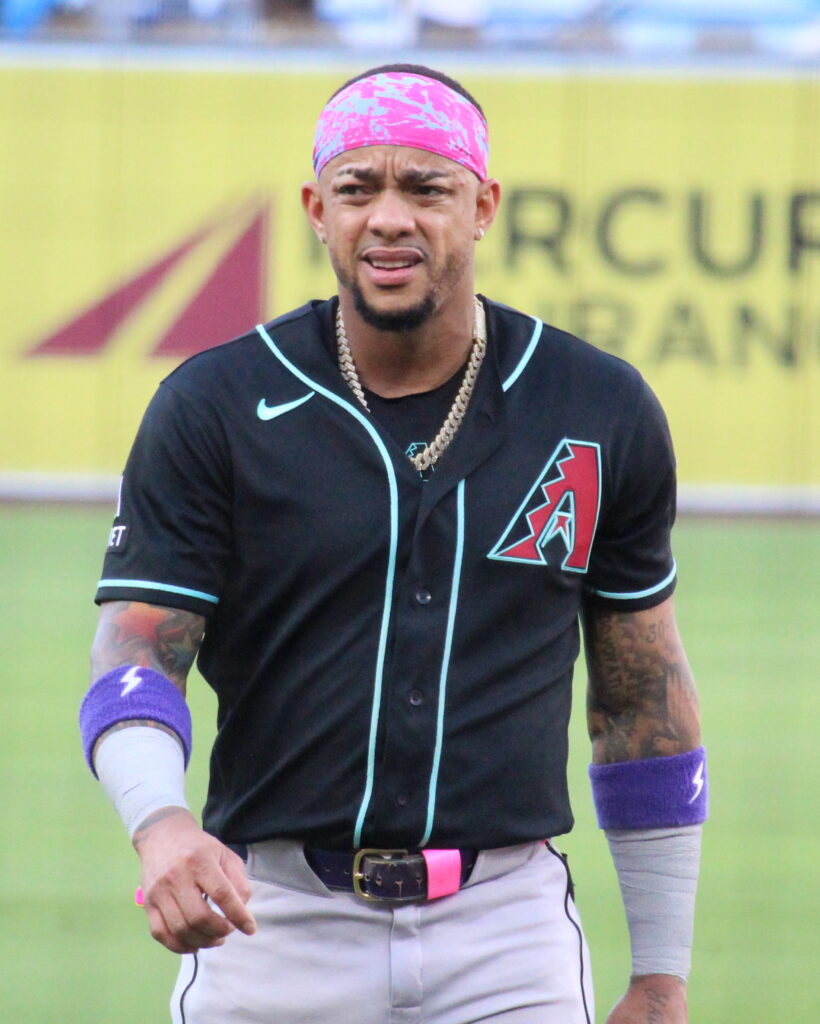
Ketel Marte’s recent offensive record presents Baltimore with two questions: what level of production to expect, and how much roster change an acquisition would justify.
The attraction is understandable when looking at the hitter Marte was in 2024 and 2025. The evaluation becomes more complicated when adding his 2026 season and asking where an acquired player would fit in Baltimore. Interest opens a discussion; it does not supply the answers.
For the Orioles, the useful exercise is to evaluate the entire resulting roster. A trade would need to improve the team after accounting for the players surrendered, the playing time redistributed and the other work left to do.
Three seasons, two different offensive levels
MLB’s official batting records show Marte hitting .292/.372/.560 with 36 home runs and a .932 OPS in 136 games in 2024. In 2025, he hit .283/.376/.517 with 28 homers and an .893 OPS in 126 games.
His 2026 line was .249/.316/.432, with 22 home runs and a .748 OPS in 141 games. The on-base percentage fell 60 points from 2025 and the slugging percentage fell 85 points. Together, those changes produced a 145-point decline in OPS.
The contrast should guide the discussion of cost. A team can reasonably see upside in the earlier record while still taking the latest season seriously. Paying as though a return to the higher level were certain would build a significant assumption into the transaction.
There is another useful distinction in the numbers. Marte struck out 86 times in 624 plate appearances in 2026, a rate of 13.8 percent. In 2025, the corresponding figures were 83 in 556, or 14.9 percent. His offensive decline therefore did not come with a rising strikeout rate. That observation narrows the question; it does not diagnose the cause or establish what happens next.
A bat would change the infield plan
In his November 16 MASN mailbag, Roch Kubatko noted Baltimore’s existing second-base options in Jackson Holliday, Jordan Westburg and Blaze Alexander. He also discussed the possibility of some infielders working in the outfield. Those possibilities make a fit conceivable, but they do not amount to a completed defensive plan.
Moving a player on a lineup card is the easy part. A club still needs to know whether he can handle the new position and whether the offensive improvement exceeds any defensive cost. Birdland Today’s earlier examination of the Orioles’ outfield experiments set out that distinction: practice can test an option; it cannot establish the result in advance.
For that reason, a Marte evaluation should include a credible allocation of innings and at-bats. If the plan depends on another player changing positions, that change belongs in the analysis of the deal. If it depends on a second trade, the price and uncertainty of that move belong there, too.
The return package matters as much as the name
A familiar, accomplished hitter makes it easy to discuss a trade in terms of what arrives. The players leaving would shape the outcome just as much. Until a concrete return is known, there is no responsible way to declare an acquisition a bargain or an overpayment.
The same applies to opportunity cost. Baltimore should compare any prospective package with what those players or resources could accomplish elsewhere on the roster. A good hitter can improve a lineup while a particular trade for him still falls short of the club’s best available use of its assets.
Kubatko also notes that Marte can veto a trade. Even a baseball fit and an acceptable exchange would not make a move automatic.
The standard for Baltimore should be demanding but open-minded: evaluate a range of offensive outcomes, identify a workable defensive arrangement and judge the full cost. Marte’s earlier production makes the exercise worthwhile. His most recent season makes precision essential.
Sources and image credit
Research cutoff: November 16, 2026, 8 a.m. Eastern. Sources: MLB.com discussion report; Roch Kubatko, MASN, November 16; MLB official year-by-year batting records. Rate calculations and roster evaluation are Birdland Today’s analysis.
Photograph: Ketel Marte before Arizona’s game against San Diego on July 9, 2026. Reunion, via Wikimedia Commons, CC BY 4.0. No modifications other than CMS display sizing. Archival Arizona photograph; it does not depict Marte as an Oriole.

Keep reading
Related Blog Posts

Orioles’ 2027 Ticket Sale: Key Dates and a Practical Planning Guide
The Orioles’ public sale starts November 19, with Opening Day handled separately. A guide to checking game dates, giveaways and special-package details.
Read Post
Orioles Retain José Barrero on a 2027 Minor League Deal
José Barrero returns on a 2027 minor league agreement after hitting 23 home runs for Norfolk. His recent record frames the opportunity and the offensive challenge.
Read Post
Alex Hoppe’s Long Route to an Orioles Bullpen Opportunity
Alex Hoppe’s path from Iowa and UNC Greensboro to Baltimore includes two trades and an encouraging, small-sample Orioles introduction.
Read Post