
Blog Post
Blaze Alexander’s Orioles Breakthrough Faces a Test of Repeatability
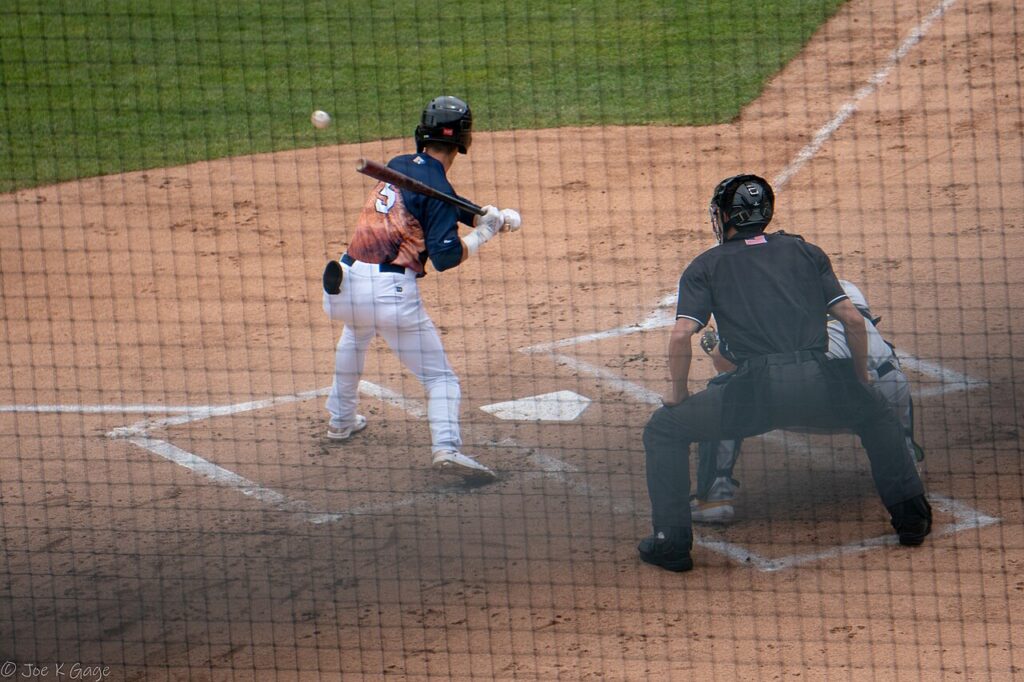
Alexander’s first Baltimore season brought better contact and a .303 average. A longer, healthier run will test how much of that improvement can last.
Blaze Alexander gave the Orioles a stronger offensive option in 2026 than his previous major league record suggested. The next challenge is establishing which parts of that improvement can survive a longer season and another round of adjustments from opposing pitchers.
In 93 games during his first year with Baltimore, Alexander hit .303 with a .358 on-base percentage and .414 slugging percentage. His 79 hits included 13 doubles, two triples and four home runs. Ten stolen bases added another dimension to a season built more on contact and reaching base than on overwhelming power.
The production mattered. So did the limits of the sample: 261 at-bats and 289 plate appearances, with injuries interrupting the year. The Orioles can appreciate a useful season without treating its batting average as a settled forecast.
Years between the draft and debut
Born in Cape Coral, Florida, on June 11, 1999, Alexander attended Bishop Verot before finishing high school at IMG Academy. Arizona selected him in the 11th round of the 2018 draft. His brother CJ also became a professional player.
Alexander’s route through the Diamondbacks organization included rookie ball, Missoula and Kane County before the canceled 2020 minor league season interrupted the climb. Hillsboro, Amarillo and Reno followed. Arizona added him to its 40-man roster in November 2022, but the major league opportunity still lay ahead.
He debuted on March 28, 2024, nearly six years after being drafted. That first Arizona season covered 61 games, a .247 average and three home runs, with a .664 OPS. In 2025, he appeared in 74 games, hit .230 and produced seven homers with a .706 OPS.
Those seasons established major league experience without securing an uninterrupted everyday assignment. For a player in that position, defensive flexibility can create additional opportunities, especially when another club sees a fit.
Baltimore’s investment
The Orioles acquired Alexander on February 5, 2026, sending right-hander Kade Strowd and minor leaguers Wellington Aracena and José Mejía to Arizona. The move gave Baltimore another player who could compete for different assignments rather than requiring one fixed position to become available.
Such acquisitions rarely dominate an offseason conversation. Their value becomes clearer once the season begins changing the original lineup plan. Injuries, rest days and late-game substitutions create assignments that cannot always be covered by a single-position reserve.
Alexander’s .772 OPS represented an improvement over both Arizona seasons. Four home runs, however, make clear that the change was not the emergence of a new middle-of-the-order power hitter. His contribution came through a different combination of skills.
Availability also shaped the result. Alexander broke his left hand after being hit by a pitch in July. Back discomfort led to another injured-list stint in September; his transaction record lists an activation on September 28. Those were separate interruptions, and neither should disappear from an evaluation of his workload.
The improvement beneath the average
The strikeout totals provide a useful reason for optimism. Alexander struck out 63 times in 289 plate appearances in 2026, a rate of about 21.8 percent. The previous year, his 86 strikeouts in 266 plate appearances produced a rate of roughly 32.3 percent.
That change gave him more opportunities to put the ball in play. It does not, by itself, identify a mechanical cause or prove the improvement is permanent. The next test is whether he can maintain it against pitchers with another season of information about him.
The .303 average requires a second consideration. MLB’s season record lists a .385 batting average on balls in play. That statistic removes home runs and measures how frequently balls in play become hits. Contact quality, speed, positioning and ordinary variation can all contribute. It is not simply a measure of good fortune.
It nevertheless argues against assuming the same average will recur. If more balls reach a defender, Alexander will need other ways to sustain his offense. Keeping the strikeouts down would help. His 19 walks also matter when considering how his on-base production might respond to a lower batting average.
That is a reason for a balanced projection, not a dismissal of the season. A useful player can contribute at an average below .303, especially when the defensive work creates more ways to get him into games.
A role earned through repeatability
Versatility must mean more than a list of positions next to a name. Baltimore needs to be comfortable making the actual defensive assignment. Alexander’s arm and infield background give him tools for that competition, while his offensive performance provides a reason to seek opportunities.
An everyday position should not be guaranteed on 261 at-bats alone. Reducing him to an emergency option would also overlook what he accomplished. A meaningful role, continued evaluation and playing time shaped by performance offer a more defensible middle ground.
For Alexander, the next step is a longer run of games, sustained contact gains and dependable defensive work. His first season in Baltimore supplied a stronger starting point. Repeating the useful parts would turn that opportunity into a more durable place on the roster.
Sources: Official MLB season statistics; MiLB biography and transactions; career chronology and references; July injury reporting.
Photo: Blaze Alexander with the Kane County Cougars, June 12, 2019. Joseph Gage, CC BY-SA 2.0, via Wikimedia Commons. Resized; archival minor league image. Photo adaptations retain the same license.

Keep reading
Related Blog Posts

Orioles Agree With Bautista, Tender Three More Contracts
The Orioles agreed with Félix Bautista for 2027 and tendered Henderson, Cowser and Westburg. Salary details remain separately attributed reporting.
Read Post
Coby Mayo’s 24-Homer Season Leaves an On-Base Challenge
Coby Mayo’s home-run rate rose in 2026, while his on-base percentage stayed nearly flat. Walks and strikeouts frame his next Orioles challenge.
Read Post
Orioles Face Tender Deadline With Four Arbitration Cases Ahead
Orioles tender-day analysis, updated with Bautista’s agreement and confirmed tenders for Henderson, Cowser and Westburg. Morning context is retained.
Read Post