
Blog Post
Freddy Peralta Gives Orioles Durability—and a Strikeout Question
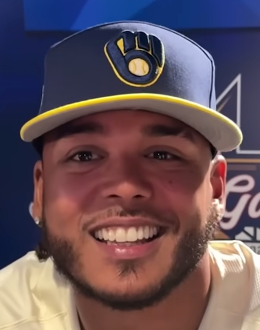
Freddy Peralta gives Baltimore a durable recent workload. Recovering more strikeouts will help determine how much value follows the investment.
The Orioles have added an established starter to a rotation facing a significant departure. Their announced five-year agreement with Freddy Peralta, reported by MLB at $125 million, changes the offseason question from whether Baltimore would commit to a pitcher to what this particular commitment will produce.
The distinction matters because a substantial investment can be welcome without making every part of its evaluation simple. Peralta has repeatedly handled a regular starting schedule. His 2026 performance also left questions about the strikeout ability that helped define his best earlier seasons.
Trevor Rogers’ reported Cubs agreement, pending a physical, gives the move additional context. Baltimore is adding a different kind of pitcher rather than reproducing exactly how its departing left-hander generated his innings.
A recent record of taking the ball
Peralta made 32 starts in 2024, 33 in 2025 and 32 in 2026. His innings totals were 173⅔, 176⅔ and 169. That is a useful foundation for a staff trying to make its schedule more dependable, even though past availability cannot guarantee future health.
A recurring rotation vacancy has effects beyond a single game. It can force a bullpen to cover additional innings, change the timing of a prospect’s promotion and reduce flexibility for the following series. A starter with a substantial recent workload gives a club a better place to begin addressing those pressures.
The Orioles still need alternatives. Adding one established pitcher should strengthen the rest of the plan rather than justify assuming every other uncertainty has disappeared. Depth remains valuable when someone needs another day between starts or falls short of expectations.
The strikeout question is measurable
Peralta’s ERA rose from 2.70 in 2025 to 4.42 in 2026. The change in strikeouts makes the comparison more informative: he struck out 204 hitters in 2025 and 156 last season. His innings declined, but his strikeout rate also fell, from more than 10 per nine innings to slightly more than eight.
Those numbers do not establish a specific mechanical problem or a ready-made solution. They identify a performance question. Can Baltimore help Peralta finish more plate appearances with a missed bat while preserving the efficiency needed for a regular starting job?
That is a more useful standard than treating a successful introduction or an encouraging radar reading as proof that a five-year agreement will work. The value has to appear in the quality and volume of the innings themselves.
Tampa Bay improved the results, with a different balance
The two parts of Peralta’s 2026 season invite close examination. He recorded a 4.99 ERA in 22 Mets starts and a 3.25 ERA in 10 Rays starts. The later stretch was better, but it did not come with a return to his Milwaukee strikeout rate.
With New York, Peralta struck out about nine hitters per nine innings and walked 3.8. With Tampa Bay, the strikeouts were approximately seven per nine, while the walks fell to about 2.4. He also allowed fewer hits per inning with the Rays.
That combination helped his results without requiring the same strikeout profile he had shown earlier. It leaves Baltimore with several related questions: how reliably he can limit free runners, how well he can manage contact and whether more swing-and-miss can return.
It would be premature to attribute the improvement to an unverified adjustment. A team change and better results can occur together without proving a single cause. The public numbers offer a starting point for evaluation, not private knowledge of the pitching work.
Replacing Rogers means changing the mix
Rogers and Peralta each worked roughly 169 innings in 2026. Rogers struck out 157 hitters and Peralta 156, nearly identical totals. The walks were more distinct: 39 for Rogers and 63 for Peralta. Rogers finished with a 4.03 ERA, compared with Peralta’s 4.42.
None of those comparisons decides which pitcher will perform better in 2027. They do show why exchanging names on a rotation depth chart does not reproduce the same strengths and risks. Baltimore is making a choice about the pitcher it expects to have, informed by several seasons rather than one selected stretch.
Using the reported contract total, the simple annual average is $25 million. That arithmetic describes the size of the investment, not every payment or accounting detail. Its value will depend on the agreement as a whole, including the later seasons.
The move deserves a positive reception for addressing a clear need. It also deserves an honest performance standard. Keep the recent durability, improve the ability to end plate appearances and build enough support around the rotation to withstand the periods when the first plan does not work. That is how the announcement can become a stronger pitching staff.
Sources: Orioles announcement; MLB contract reporting; Rogers agreement reporting; Peralta official statistics; Rogers official statistics. Reporting and analysis as of November 25, 2026.
Image: Freddy Peralta during a July 27, 2025 FanDuel interview while with Milwaukee. FanDuel, CC BY 3.0, via Wikimedia Commons. Resized. Archival image; not an Orioles appearance or contract signing.

Listen: Freddy Peralta Arrives. What the Orioles Are Buying.
Keep reading
Related Blog Posts

Shared Media Revenue Leaves Baseball’s Central Labor Dispute Unsettled
Players accepted equal media-revenue sharing, but the salary-cap dispute remains a week before MLB’s labor agreement expires.
Read Post
Orioles’ Reported Luis Vázquez Return Adds Depth and an Offensive Test
Luis Vázquez is reportedly returning on a minor league deal. His Norfolk record shows the offensive test ahead of a larger role with the Orioles.
Read Post
Hunter Goodman’s Power Explains Orioles’ Reported Inquiry
Reported Orioles talks about Hunter Goodman did not advance. His 41 homers, including 25 on the road, explain the interest and remaining questions.
Read Post