
Blog Post
Brandon Young’s Slower Splitter: What the Orioles Can Learn
PITCHING ANALYSIS
Brandon Young’s splitter became slower and more effective in two stretches highlighted by MASN. That gives Baltimore a useful development question—and a reason to look beyond velocity alone.
More velocity is easy to recognize. A slower pitch that produces better results requires a closer look. Brandon Young’s splitter offers the Orioles an example worth studying as they assess their pitching for 2027.
In a November 8 statistical review, MASN’s Roch Kubatko reported that Young’s splitter averaged 87.7 mph in his first six starts of 2026, with opponents going 10-for-21 against it. In the later 20-start window identified by the report, from May 24 through September 25, the average was 83.6 mph and opponents went 21-for-95.
That is a reported decrease of 4.1 mph, accompanied by a drop in batting average against the pitch from .476 to .221. The direction is striking. It does not, by itself, establish why the results changed.
Separate the observation from the explanation
The observation is narrow: in the two reported windows, the pitch was slower and hitters had less success against it. A mechanical explanation would require more evidence.
Location, movement, sequencing and the other pitches a hitter must consider could all be questions for further review. None can be declared the cause from these averages alone. We also should not assume that Young deliberately targeted a particular speed without a verified account of the adjustment.
Our view: Baltimore should treat this as a promising lead for its development review, rather than a command to make every splitter slower. What worked in one pitcher’s mix may not transfer to another arm.
The samples deserve context
The early batting-average sample contains 21 at-bats; the later one contains 95. Those are different amounts of evidence. Neither rate is a guarantee of the pitch’s future performance.
The windows also should not be presented as a complete season breakdown. MLB’s official season listing credits Young with 28 starts, 156⅔ innings and a 3.56 ERA. The six-start and 20-start samples described in the report account for 26 starts, so this article does not assign the remaining starts to either group.
That distinction keeps the attractive trend from becoming a broader claim than the sourcing supports. The full-season pitching line provides context, while the reported pitch data isolates a question within it.
What Baltimore should examine next
A useful follow-up would look at individual outings and the relationship between the splitter and Young’s other pitches. Did the change remain effective across different opponents? How often did he use it, and in which counts? Did improved outcomes hold when hitters saw him again?
Those answers would help distinguish a repeatable improvement from a favorable stretch. They would also make the discussion more useful than a simple comparison of radar-gun readings.
The takeaway for Orioles fans is specific: Young’s reported splitter results improved while its average velocity declined. The next step is understanding the whole pitch mix, not treating slower as automatically better.
Read our Orioles pitching-statistics explainer for more on the limits of judging a staff by one number.
Sources and reporting context
- Roch Kubatko, MASN: “Rotating some statistics among Orioles starters,” November 8, 2026. Source for the two splitter windows; those pitch-level results have not been independently reconstructed here.
- MLB official 2026 Brandon Young season statistics. Source for the full-season line.
Research cutoff: November 9, 2026, 8:04 p.m. Eastern. Analysis is Birdland Today’s; this article does not report a new transaction, injury update or confirmed mechanical change.
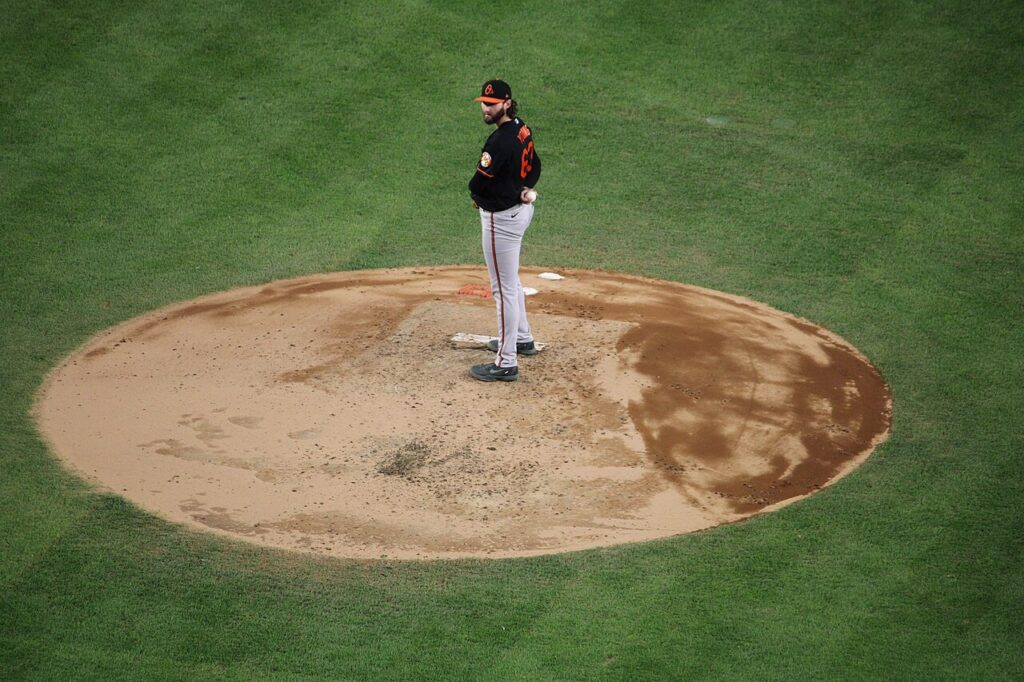
Photo: Brandon Young pitching at Yankee Stadium on September 25, 2026, by J. Passepartout, via Wikimedia Commons, CC BY-SA 4.0. Wikimedia 1280-pixel thumbnail; website resizing/display cropping may apply. Photo adaptations are shared under the same license. The image does not establish the type of pitch being thrown.

Keep reading
Related Blog Posts

Orioles Stolen-Base Review: Efficiency Before More Attempts
Baltimore recorded 78 steals and 33 caught stealing in MLB’s 2026 listing. The numbers make a case for better opportunities before simply running more often.
Read Post
How the Orioles Closed Out the 1983 World Series
Murray’s two homers, Dempsey’s extra-base hits and McGregor’s shutout powered Baltimore’s 1983 World Series clincher. Revisit the decisive game through MLB’s records.
Read Post
Orioles Outfield Search: More Than a Right-Handed Bat
Cowser, Beavers and O’Neill give Baltimore options, but the Orioles’ outfield search needs a clear plan for offense, defense and playing time—not just handedness.
Read Post