
Blog Post
Adley Rutschman’s 2025 Slump and the Danger of a Career Verdict
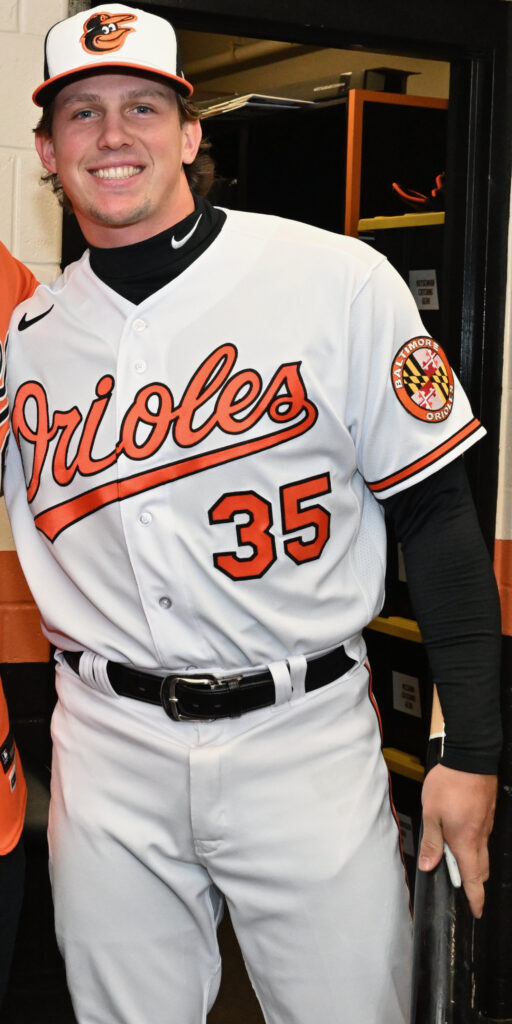
HISTORICAL ANALYSIS
Baltimore had real reasons to question its catcher’s offensive decline in May 2025. Turning that concern into a verdict on an entire career required a much larger leap.
By May 12, 2025, Adley Rutschman’s early-season batting line had become a source of frustration in Baltimore. The player expected to stabilize the Orioles’ lineup was struggling to generate the offense his reputation promised.
Through May 11, the official MLB date-range statistics show a .203 batting average, .298 on-base percentage and .338 slugging percentage in 37 games. He had four home runs and 11 RBI. Those results justified a serious discussion about his performance. They did not, by themselves, settle what kind of major-league career he would have.
This assessment revisits the information available at that May 2025 checkpoint. A separate update below identifies a later development, so hindsight does not quietly become part of the original argument.
A decline worth taking seriously
Rutschman had established a more productive offensive baseline before that spring. In 2022, he hit .254 with a .362 on-base percentage and .445 slugging percentage across 113 games. The following season brought a .277/.374/.435 line and 20 home runs in 154 games.
His 2024 full-season line fell to .250/.318/.391. That change was relevant when evaluating the beginning of 2025. The concern was not simply that several April fly balls had landed in gloves. Baltimore was trying to understand a less productive stretch against the background of an earlier decline.
Fans were entitled to expect more from a player who had already shown he could contribute in the majors. Earlier success creates an informed standard; it should not provide permanent immunity from criticism.
The useful criticism, however, needed to stay specific. Getting on base less often meant fewer extended innings. Reduced slugging meant fewer extra bases when he did connect. Those are baseball problems a club can investigate. A sweeping label offers much less guidance about what to fix.
Results, causes and expectations
A batting line records outcomes. It does not identify every cause behind them. Swing decisions, contact quality, opposing pitchers, positioning and ordinary variation can all affect the results a hitter produces over a particular stretch.
That distinction matters when reading a disappointing average. Poor outcomes can coexist with some encouraging process indicators, just as a successful week can conceal weaknesses. Any claim about specific underlying metrics needs its own verified data. The appropriate response is to investigate further, rather than assume either bad luck or permanent decline explains everything.
Expectations complicated the conversation. A prominent young catcher can become a symbol of a rebuilding organization’s future. Once that happens, his plate appearances carry more emotional weight than those of a player with a smaller reputation. Fans are judging the promised team as well as the hitter in the box.
But an organization’s hopes are not a statistical category. A player can fall short of an ambitious projection and still make substantial contributions. Conversely, a famous name does not turn an unproductive stretch into acceptable middle-of-the-order offense.
What a fair evaluation needed
At the May checkpoint, the strongest argument was for clear standards and continued scrutiny. Baltimore needed better offensive results from Rutschman. It also needed to evaluate his overall work at catcher and avoid treating a lineup problem as proof that one player alone could repair the team.
Moving a hitter in the order, managing his workload or reconsidering the distribution of catching and designated-hitter assignments can be part of a response. Whether any particular choice was appropriate would depend on the evidence available to the club. The public batting line alone could not establish what caused the decline or prescribe a single solution.
Birdland Today’s view is that patience and accountability belong together. Patience means allowing time for meaningful adjustments. Accountability means checking whether those adjustments improve the actual game. Neither requires pretending the poor results did not happen.
The career question should therefore have remained open. Rutschman’s earlier production was real. So was his offensive decline. A fair assessment could hold both facts at once while asking what the next sustained stretch would show.
Later context: the Baltimore chapter changed
In August 2026, the Associated Press reported that Boston acquired Rutschman from Baltimore. That transaction belongs to a later chapter. It should not be used to pretend that the outcome of his Orioles tenure was already knowable from a .203 average in May 2025.
Baltimore’s present catching discussion has moved toward Samuel Basallo’s development. The earlier Rutschman debate still offers a useful lesson: evaluate the performance directly, examine its causes carefully, and give career-sized conclusions the evidence they require.
Sources and credits
- MLB official batting statistics through May 11, 2025.
- MLB official career statistics.
- Associated Press: Boston acquires Rutschman, August 2026.
Original reporting context: May 12, 2025; batting-statistics cutoff May 11, 2025. Later transaction context verified November 7, 2026. Newly written and published in November 2026. Interpretations above are Birdland Today analysis.
Photo: Adley Rutschman at Camden Yards on April 7, 2023, by Maryland GovPics / Joe Andrucyk, via Wikimedia Commons, CC BY 2.0. Cropped from the original photograph; resized for display. Archival image, not a photograph from the May 2025 games discussed.

Listen to the May 12, 2025 Birdland Today discussion of Rutschman.
Keep reading
Related Blog Posts

Orioles Pitching Review: What ERA Leaves Out
The Orioles’ 4.07 ERA and 739 runs allowed tell different stories. A closer look at the numbers explains what Baltimore’s offseason review should examine.
Read Post
Pete Alonso Delivered the Power. Baltimore Must Build Around It.
Forty-three home runs and a .363 on-base percentage gave Baltimore a clear return from Pete Alonso. The next challenge is building a deeper lineup around him.
Read Post
Why the Orioles’ Three Open 40-Man Roster Spots Matter
Baltimore has three open 40-man roster spots. How the Orioles balance prospect protection, potential additions and flexibility will shape their offseason choices.
Read Post