
Blog Post
Pete Alonso Delivered the Power. Baltimore Must Build Around It.
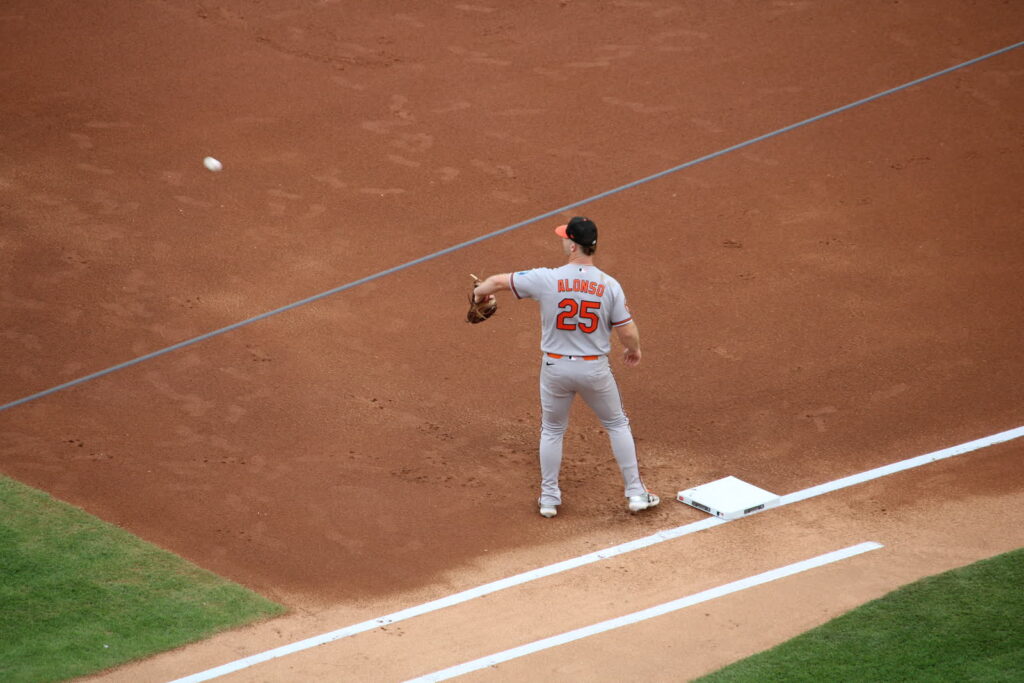
PLAYER PROFILE
Forty-three home runs gave Baltimore a clear return on its investment. The next challenge is building a lineup that gets more from that power.
Pete Alonso’s first Orioles season supplied a straightforward answer to a costly question. Baltimore signed an established power hitter, and an established power hitter arrived: 43 home runs, 113 runs batted in and a .267/.363/.522 batting line over 161 games in 2026.
The harder question belongs to the team around him. A productive first baseman can improve the middle of an order without resolving every weakness in a roster. Alonso’s individual results and Baltimore’s remaining construction work deserve separate judgments.
From Florida to a remarkable rookie season
Born in Tampa on December 7, 1994, Alonso played at the University of Florida before the Mets selected him in the second round of the 2016 draft. He made his major-league debut on March 28, 2019, and immediately established the skill that would define his career.
Alonso hit 53 home runs that season, drove in 120 runs and won the National League Rookie of the Year award. His .583 slugging percentage and 161 games played made that introduction more than a collection of memorable swings. He produced across almost an entire schedule.
That debut also set an unusually demanding standard. Alonso followed with 37 homers in 2021, 40 in 2022 and 46 in 2023. Those seasons reinforced the power’s durability, even as the shape of his offense changed. His batting average was .271 in 2022 and .217 a year later. Both seasons contained substantial home-run production; they did not deliver the same frequency of hits.
The swing that changed a postseason
On October 3, 2024, Alonso hit a three-run home run against Milwaukee closer Devin Williams in the ninth inning of the deciding Wild Card game. The Mets won 4–2 and advanced.
The significance is easy to understand without turning one swing into a promise about future pressure situations. A dangerous power hitter can change a game that appears to be slipping away. That possibility helps explain why clubs pursue this kind of bat. It does not eliminate the value of the plate appearances and lineup decisions that create the opportunity.
Alonso’s final Mets season added more substantial regular-season evidence. In 2025, he played 162 games, hit .272 with a .347 on-base percentage and finished with 38 home runs and 126 RBI. Baltimore was pursuing a sustained record of production rather than a speculative projection.
What Baltimore bought—and received
The Orioles finalized a five-year, $155 million contract in December 2025 covering the 2026–30 seasons. The commitment will be judged across its full term. Its first year nevertheless offers a clear starting point.
Alonso’s 43 home runs were accompanied by a .363 on-base percentage. That second number matters. When a pitcher avoids giving a slugger a pitch to drive, reaching base can still extend an inning and create an opportunity for the next hitter. A lineup gains more from a dangerous bat when productive plate appearances continue between home runs.
His availability was another tangible contribution. Over the last three regular seasons, Alonso played 162, 162 and 161 games. That record cannot guarantee future health, but it describes what he actually supplied: a near-daily presence in the lineup.
He turns 32 in December. Baltimore should keep evaluating the entire offensive profile as the contract progresses. A familiar home-run total should not replace attention to on-base production, extra-base hits and the quality of his plate appearances.
A foundation for the next decisions
Birdland Today’s view is that Alonso’s first season should sharpen the offseason agenda. Put runners ahead of him. Give pitchers reasons to respect the hitters behind him. Develop enough depth that one unavailable player does not create a recurring problem elsewhere in the order.
Those are roster-building priorities, not a description of private front-office discussions. They follow from the value of the player Baltimore already has. Once a club commits to a major middle-of-the-order bat, supporting that investment becomes part of the job.
Alonso’s production also should not become a reason to minimize the remaining work. A strong individual season can coexist with disappointing team results. The player should receive credit for what he delivered, while the organization remains accountable for improving the roster around him.
The same distinction applies to expectations. Baltimore does not need Alonso to introduce his power again. It needs him to sustain a useful overall offensive game while the club makes better use of it. His first Orioles season gives that effort a foundation in actual results.
For another young bat shaping the lineup, read our analysis of Samuel Basallo’s development.
Sources and credits
- MLB official biography, awards and season statistics.
- Baseball-Reference: draft and college background.
- MLB: Baltimore finalizes Alonso’s contract.
- October 2024 Wild Card game report.
Reporting date and research cutoff: November 7, 2026, 3:34 a.m. Eastern. Evaluations above are Birdland Today analysis.
Photo: Pete Alonso at Yankee Stadium on September 25, 2026, by J. Passepartout, via Wikimedia Commons, CC BY-SA 4.0. Archival photograph, displayed with cropping; image adaptations are available under the same license. This is not an image of the 2024 postseason play.

Keep reading
Related Blog Posts

Orioles Pitching Review: What ERA Leaves Out
The Orioles’ 4.07 ERA and 739 runs allowed tell different stories. A closer look at the numbers explains what Baltimore’s offseason review should examine.
Read Post
Adley Rutschman’s 2025 Slump and the Danger of a Career Verdict
A look back at Adley Rutschman’s May 2025 decline, the evidence available then and the limits of turning a difficult stretch into a career verdict.
Read Post
Why the Orioles’ Three Open 40-Man Roster Spots Matter
Baltimore has three open 40-man roster spots. How the Orioles balance prospect protection, potential additions and flexibility will shape their offseason choices.
Read Post